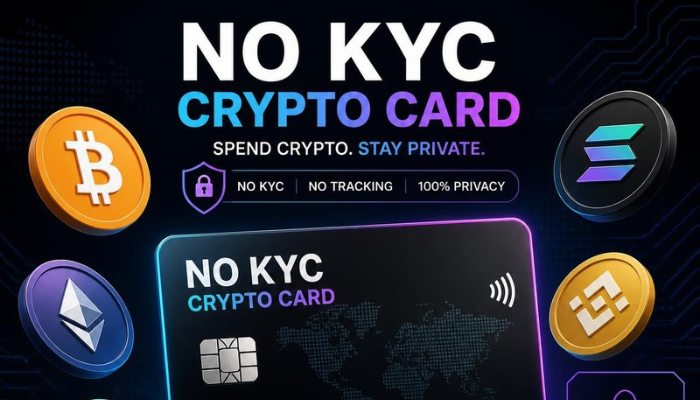
Cryptocurrency is increasingly being used for more than investing and trading. Many crypto users now want a practical way to use their digital assets for everyday purchases, online subscriptions, travel, advertising, and mobile-wallet payments.
A no KYC crypto card can make that process simpler by allowing users to fund a prepaid virtual card with cryptocurrency instead of first converting their assets through a traditional bank account. One example is Nocturne.cards, a US-based service operated by Noctavel LLC that offers virtual cards funded with crypto and supports Apple Pay and Google Pay.
What Is a No KYC Crypto Card?
A no KYC crypto card is a virtual or prepaid payment card that can be funded with cryptocurrency without requiring users to complete a traditional document-upload KYC process during signup.
Nocturne states that users can register with an email address or account token, deposit supported cryptocurrency, and create a virtual card without uploading identity documents. Its FAQ specifically describes the service as having no document-based KYC step.
However, no KYC should not automatically be interpreted as anonymous. Nocturne states that its service is designed for lawful use and remains subject to applicable AML and regulatory requirements. Sanctioned and prohibited jurisdictions are also excluded.
How Nocturne Crypto Cards Work
The basic process is designed around three steps:
- Deposit cryptocurrency
- Create a virtual card
- Use the card for payments
Nocturne currently lists Bitcoin, Ethereum, USDT, USDC, Litecoin, and Monero among its supported deposit assets. Deposits are charged a 0.49% fee according to the published pricing information.
After the cryptocurrency deposit is confirmed, users can select a card from their dashboard and load it from their available balance. Nocturne says card creation takes about a minute, with the card number, expiration date, and CVV generated for the card.
Why Use a Crypto-Funded Virtual Card?
Crypto holders often face a simple problem: cryptocurrency can be easy to hold and transfer, but using it directly for everyday purchases is not always convenient.
A crypto-funded virtual card creates another payment route.
Instead of sending crypto directly to a merchant, the user deposits crypto into the card service and uses the resulting card details at participating merchants.
This can be useful for:
- Online shopping
- Software subscriptions
- Digital services
- Travel bookings
- Advertising platforms
- Mobile payments
- In-app purchases
- Everyday contactless payments
Nocturne describes its cards as operating on major international card networks, allowing them to be used at a large number of merchants where the relevant card network is accepted.
No KYC Does Not Mean No Compliance
This distinction is important when discussing no KYC crypto cards.
The phrase “no KYC” can sometimes make people assume that a service does not collect information or follow financial regulations. That is not necessarily the case.
Nocturne says signup does not require identity documents, while its company information states that the service remains subject to AML and regulatory requirements. It also blocks sanctioned jurisdictions and certain restricted merchant categories.
The company says it stores account credentials, balance and card information, transaction information, and deposit transaction IDs as needed to operate the service.
Therefore, the more accurate description is a crypto-funded virtual card with no document-based KYC at signup, rather than an anonymous payment card.
Using Crypto With Apple Pay and Google Pay
Mobile wallets are one of the most useful features of modern virtual cards.
Nocturne currently supports Google Pay on Shadow and Aurora cards, while Aurora also supports Apple Pay. The company says Aurora can be added to Apple Wallet or Google Wallet and used for contactless payments where supported.
This means users do not necessarily need to enter card details every time they make a payment.
With a compatible mobile wallet, the virtual card can become part of the user’s normal phone-based payment setup.
At supported contactless terminals, tokenization can also prevent the underlying card number from being presented directly to the terminal.
Nocturne Card Options
Nocturne currently offers three virtual card options.
Shadow
Shadow is positioned as the basic virtual card. It can be used for online and in-app payments and supports Google Pay. The published one-time card price is $25.
It may suit users who mainly need a crypto-funded card for online services and Android-based mobile payments.
Aurora
Aurora is the broader option. It supports online payments, in-app purchases, Apple Pay, Google Pay, and contactless payments.
The published one-time price is $45.
Aurora is particularly relevant for users who want to combine a crypto-funded virtual card with mobile-wallet payments.
Eclipse
Eclipse is designed specifically around advertising and digital media spending. Nocturne lists platforms such as Meta, Google Ads, TikTok, and X among its intended uses.
Its published launch price is $5, and it has a separate card-load fee structure.
How Much Does a Nocturne Crypto Card Cost?
The cost depends on the card and how much is loaded.
According to Nocturne’s published pricing:
- Shadow: $25 one-time card price
- Aurora: $45 one-time card price
- Eclipse: $5 promotional card price
- Crypto deposits: 0.49%
- Standard card loading: 5%, decreasing to 3.5% based on the account’s recent volume
- Eclipse loading: 3.5%, decreasing to 2.5%
- Payment fee: $0 added by Nocturne
- Monthly fee: $0
- FX markup: 0% added by Nocturne
Users should still check the current pricing page before depositing funds because fees and promotional prices can change.
Which Cryptocurrencies Can Be Used?
Nocturne currently lists six crypto assets for deposits:
- Bitcoin (BTC)
- Ethereum (ETH)
- Tether (USDT)
- USD Coin (USDC)
- Litecoin (LTC)
- Monero (XMR)
Network confirmation requirements and minimum deposits vary depending on the asset.
For users who already hold crypto, this can provide a direct route from their crypto balance to a prepaid virtual payment card.
Where Can a Crypto Card Be Used?
A virtual crypto card can be useful anywhere the underlying card network and merchant category support the transaction.
Potential use cases include:
Online Shopping
Users can enter their virtual card details at supported online checkouts just like they would with another prepaid card.
Subscriptions
A separate virtual card can be useful for recurring software, entertainment, and other subscriptions.
Travel
A crypto-funded card may be used for eligible travel-related purchases such as rides, accommodation, and flights where the merchant accepts the card.
Advertising
Eclipse is specifically designed around digital advertising expenditure, including major advertising platforms listed by Nocturne.
Everyday Purchases
Aurora can also be used for contactless payments through supported mobile wallets, making it suitable for certain everyday purchases.
Merchant acceptance is never universal, however. Card-network rules, merchant restrictions, geographic availability, and other payment checks can affect whether a transaction succeeds.
Virtual Card Security
Security is another important consideration when using a crypto-funded card.
Nocturne says card numbers, expiration dates, and CVVs are shown once when the card is created and then stored in encrypted form. The company also supports 3-D Secure on its cards.
Users can also freeze or close a card from the dashboard.
This can be useful if a card is no longer needed or if the user notices suspicious activity.
Mobile-wallet tokenization adds another security layer for contactless payments because the terminal receives a device token rather than the underlying card number.
Is a No KYC Crypto Card Right for You?
A crypto-funded virtual card may be useful if you already hold cryptocurrency and want a payment method for online services or mobile-wallet purchases.
It can be particularly relevant for:
- Crypto users who prefer not to upload identity documents during initial signup
- People who need virtual cards for online services
- Users who want Apple Pay or Google Pay compatibility
- Digital professionals paying for software and subscriptions
- Advertisers managing online campaign expenses
- Travelers looking for another payment option
At the same time, users should understand the limitations.
Crypto prices can change quickly, fees can apply when funding a card, certain merchants or countries may be restricted, and card acceptance depends on the relevant payment network and merchant.
No KYC Crypto Card vs Traditional Bank Card
A traditional bank card normally involves opening a bank or financial account and completing the provider’s identity verification process.
A no-document-KYC crypto card can provide a different onboarding experience.
| Feature | Traditional Bank Card | Nocturne Crypto Card |
|---|---|---|
| Funding | Bank account or supported sources | Cryptocurrency |
| Physical card | Often available | Virtual cards |
| Document upload at signup | Usually required by provider | No documents stated as required |
| Apple Pay | Depends on issuer | Aurora |
| Google Pay | Depends on issuer | Shadow and Aurora |
| Crypto funding | Usually indirect | Core feature |
| Monthly fee | Depends on provider | $0 published |
| 3-D Secure | Depends on issuer | Supported |
| Identity verification | Provider-dependent | No document-based KYC at signup |
The comparison should not be interpreted as meaning that one type of financial product is universally better. The right option depends on the user’s payment needs, location, risk tolerance, fees, and applicable regulations.
Things to Check Before Using a No KYC Crypto Card
Before depositing cryptocurrency, users should review several points.
Check availability in your jurisdiction. Nocturne states that sanctioned and prohibited jurisdictions are excluded.
Review all fees. The deposit fee and card-loading fee can have a meaningful effect on the amount available for spending.
Understand merchant restrictions. Some categories may not be supported.
Check mobile-wallet compatibility. Apple Pay and Google Pay availability can depend on the specific card, device, and account region.
Understand crypto risk. Cryptocurrency is not the same as money held in a bank deposit account, and crypto assets can fluctuate in value.
Use the service lawfully. No KYC should not be interpreted as permission to bypass financial regulations, sanctions, merchant restrictions, or other legal requirements.
Frequently Asked Questions
What is a no KYC crypto card?
It is a crypto-funded payment card that does not require users to upload identity documents as part of the initial signup process. Nocturne states that its cards can be created without a document-based KYC step.
Does Nocturne require KYC?
Nocturne’s FAQ says there is no KYC step requiring documents during signup. However, the company also states that its service remains subject to AML and regulatory requirements.
Can I use Nocturne with Apple Pay?
Yes. Nocturne states that its Aurora card supports Apple Pay.
Can I use Google Pay?
Yes. Google Pay is supported by Shadow and Aurora according to Nocturne’s card information.
Which cryptocurrencies does Nocturne support?
Nocturne currently lists BTC, ETH, USDT, USDC, LTC, and XMR for deposits.
Is Nocturne a bank?
No. Nocturne states that it is a prepaid card service operated by Noctavel LLC and that it is not a bank. Cards are issued through licensed partner institutions.
How quickly can I get a virtual card?
Nocturne says card creation takes approximately one minute after the required crypto balance is available and the card is created through the dashboard.
Final Thoughts
A no KYC crypto card can provide a practical bridge between cryptocurrency and everyday digital payments. Instead of treating crypto only as an investment asset, users can potentially use it to fund virtual cards for online purchases, subscriptions, advertising, travel, and mobile-wallet payments.
Nocturne.cards takes this approach by offering crypto-funded virtual cards, multiple card options, and Apple Pay or Google Pay support on eligible cards. Its published information also makes an important distinction: no document-based KYC at signup does not mean anonymous or outside financial compliance requirements.
For anyone considering a crypto-funded card, the key factors are supported assets, total fees, merchant acceptance, mobile-wallet compatibility, jurisdictional availability, and the provider’s security and compliance policies.