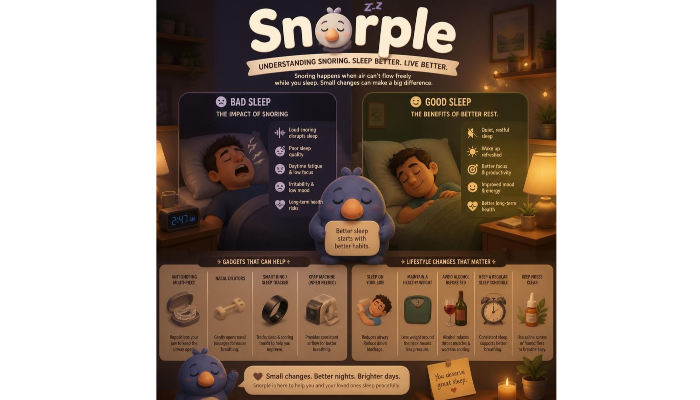
Snoring is more than an occasional nighttime noise. For many adults, it can become a persistent problem that affects sleep quality, daytime energy, relationships, and overall well-being. When snoring regularly interrupts a partner’s sleep or causes repeated awakenings, finding an effective solution becomes an important part of creating a healthier and more comfortable nighttime routine.
At Snorple, we focus on practical approaches to reducing disruptive snoring and improving the quality of sleep. From anti-snoring mouthpieces and sleep-position strategies to alternatives for people who struggle with traditional CPAP therapy, there are several options worth understanding.
The right solution depends on the underlying cause of snoring, individual anatomy, sleep habits, and whether a person has an underlying sleep disorder. By understanding how snoring develops and how different solutions work, we can make better-informed decisions about nighttime comfort.
What Causes Snoring?
Snoring occurs when airflow through the nose and throat becomes partially restricted during sleep. As the muscles of the upper airway relax, tissues can vibrate when air passes through the narrowed passage. That vibration produces the familiar sound associated with snoring.
Several factors can contribute to this narrowing, including:
- Sleeping on the back
- Nasal congestion or chronic nasal obstruction
- Relaxation of throat muscles during sleep
- Anatomical characteristics of the jaw, tongue, throat, or nasal passages
- Excess body weight
- Certain medications or substances that increase muscle relaxation
- Alcohol consumption close to bedtime
- Insufficient or irregular sleep
- Age-related changes in muscle tone
Snoring can therefore have multiple causes. A solution that works well for one person may be less effective for another. This is why understanding the potential source of nighttime airway restriction is an important first step.
How Anti-Snoring Mouthpieces Work
One of the most widely discussed non-CPAP approaches to reducing certain types of snoring is the anti-snoring mouthpiece.
Many anti-snoring mouthpieces are designed to gently reposition the lower jaw during sleep. This type of device is commonly known as a mandibular advancement device. By moving the lower jaw slightly forward, the device can help increase space in the upper airway for some people.
The principle is relatively straightforward: better airway positioning can mean less tissue vibration and potentially quieter breathing.
A mouthpiece may be particularly appealing because it is compact, portable, and does not require the machinery associated with CPAP. It can also be convenient for travel, making it an attractive option for people who want a simpler nighttime routine.
However, mouthpieces are not appropriate for every person. Dental health, jaw conditions, individual anatomy, and the cause of snoring should all be considered before using an oral appliance.
Anti-Snoring Mouthpieces vs. CPAP
CPAP, or continuous positive airway pressure, remains an important treatment for people diagnosed with obstructive sleep apnea. A CPAP machine uses a mask and pressurized airflow to help keep the airway open during sleep.
An anti-snoring mouthpiece is fundamentally different. Rather than delivering pressurized air, it works by changing the position of structures in the mouth and jaw.
For people who have simple primary snoring, an oral appliance may be worth discussing with a qualified healthcare professional. For people with obstructive sleep apnea, however, the decision is more significant. Snoring can be one symptom of sleep apnea, and treating the noise without addressing the underlying breathing disorder may not be sufficient.
Anyone experiencing symptoms such as witnessed breathing pauses, gasping during sleep, morning headaches, excessive daytime sleepiness, or persistent unrefreshing sleep should consider discussing these symptoms with a healthcare professional.
Why Sleep Quality Matters
Sleep is not simply a period when the body switches off. High-quality sleep supports physical recovery, cognitive performance, emotional regulation, and daytime alertness.
Persistent snoring can contribute to fragmented sleep, particularly when it is accompanied by repeated arousals or breathing disturbances. Even when the person who snores does not fully awaken, their partner may experience repeated disruptions.
This creates a broader issue: snoring can become a shared sleep problem.
Improving nighttime breathing may therefore benefit more than the person producing the snoring sound. A quieter sleeping environment can help both partners establish more consistent and restorative sleep.
Snoring and Couples’ Sleep
Few nighttime problems demonstrate the importance of shared sleep better than chronic snoring.
A partner may move to another room, use earplugs, wake repeatedly, or struggle to fall back asleep after each episode of disruptive noise. Over time, sleep deprivation can affect mood, concentration, patience, and relationship satisfaction.
Addressing snoring can therefore be about more than reducing noise. It can be about creating a better sleeping environment for both people.
Couples can also work together on practical changes. Encouraging side sleeping, maintaining consistent sleep schedules, reducing factors that worsen nighttime congestion, and evaluating appropriate anti-snoring solutions can all form part of a broader approach.
Sleeping Position and Snoring
Sleep position can have a significant effect on snoring for some individuals.
Back sleeping may encourage the tongue and soft tissues to move toward the back of the throat, potentially narrowing the airway. Switching to a side-sleeping position may reduce this effect in some people.
Simple positional strategies can therefore be worth trying before investing in a more complicated solution.
However, positional changes are not guaranteed to eliminate snoring. If snoring occurs regardless of sleep position, or if other symptoms suggest sleep apnea, professional assessment becomes particularly important.
Nasal Breathing and Nighttime Comfort
Nasal obstruction can make comfortable nighttime breathing more difficult. Allergies, colds, congestion, structural nasal issues, and environmental irritants may all contribute.
Addressing nasal congestion may help some people breathe more comfortably through the nose. Depending on the cause, this might involve managing allergies, improving bedroom air quality, or discussing persistent nasal symptoms with a healthcare professional.
Nasal strips and other external aids may help certain people with nasal airflow, but they should not be considered a universal treatment for snoring or sleep apnea.
Choosing an Anti-Snoring Solution
The best approach starts by identifying what type of problem we are trying to solve.
For occasional, mild snoring, lifestyle and positional adjustments may be enough. For persistent snoring, an anti-snoring mouthpiece may be worth considering. For suspected sleep apnea, professional evaluation should take priority.
When evaluating an oral appliance, important considerations include:
- Comfort: A device needs to be comfortable enough to use consistently.
- Fit: Poorly fitted appliances can be ineffective or uncomfortable.
- Jaw positioning: The amount of advancement should be appropriate for the individual.
- Dental health: Existing dental or jaw problems may affect suitability.
- Cleaning: Regular hygiene is essential for any reusable oral appliance.
- Consistency: A solution only has practical value when it can be incorporated into a sustainable nighttime routine.
A product should never be judged solely by whether it promises to eliminate snoring instantly. Realistic expectations and appropriate use matter.
Can an Anti-Snoring Mouthpiece Replace CPAP?
This is one of the most important distinctions to understand.
An anti-snoring mouthpiece should not automatically be considered a replacement for CPAP. CPAP is a medical treatment used primarily for obstructive sleep apnea, while many oral appliances are used for primary snoring or selected cases of sleep-disordered breathing.
Some people with obstructive sleep apnea may be candidates for oral appliance therapy, depending on their diagnosis and individual circumstances. That decision should be made with appropriate professional guidance.
The goal should not simply be to make snoring quieter. The goal should be safe, effective, and restorative sleep.
Creating Better Sleep Habits
Anti-snoring products can be useful, but nighttime habits also deserve attention.
A consistent sleep schedule, sufficient sleep duration, regular physical activity, and a comfortable bedroom environment can support healthier sleep. Avoiding factors that worsen snoring close to bedtime may also help.
We can think of snoring management as a complete sleep strategy rather than relying on a single product.
A practical nighttime routine may include:
- Going to bed and waking at consistent times
- Keeping the bedroom quiet, dark, and comfortable
- Addressing persistent nasal congestion
- Experimenting with side sleeping
- Maintaining healthy lifestyle habits
- Evaluating persistent or severe snoring
- Using an appropriate anti-snoring device when suitable
When Snoring Deserves Medical Attention
Not every person who snores has sleep apnea, but persistent loud snoring should not automatically be dismissed as harmless.
Professional assessment is particularly important when snoring occurs alongside gasping, choking, witnessed pauses in breathing, excessive daytime sleepiness, morning headaches, difficulty concentrating, or consistently poor-quality sleep.
A sleep evaluation can help determine whether snoring is simply caused by upper-airway vibration or is part of a more significant breathing disorder.
This distinction matters because the appropriate treatment depends on the underlying condition.
A More Comfortable Approach to Nighttime Breathing
Snoring is common, but that does not mean we have to accept disruptive nighttime breathing as an unavoidable part of sleep.
For some people, small lifestyle changes may make a meaningful difference. For others, an appropriately selected anti-snoring mouthpiece can provide a convenient approach to reducing nighttime noise. People with symptoms suggesting obstructive sleep apnea should seek professional evaluation rather than relying solely on an over-the-counter solution.
At Snorple, the focus is on understanding the relationship between airway position, snoring, sleep quality, and practical nighttime solutions. By approaching snoring as a sleep-quality issue rather than merely a noise problem, we can make more informed choices and work toward quieter nights, better rest, and more comfortable sleep for everyone sharing the bedroom.
Ultimately, the most useful anti-snoring strategy is one that is appropriate for the individual, comfortable enough to use consistently, and aligned with the actual cause of the problem. Better sleep begins with understanding what is interfering with it—and choosing a solution based on that understanding.