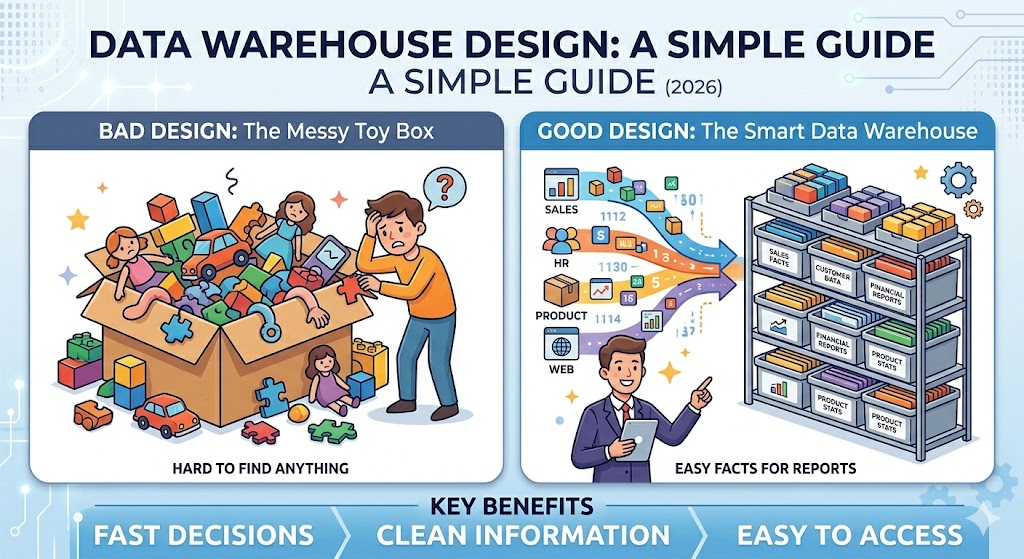
Many people ask, what is Data Warehouse Design? Think of it like organizing a massive toy box. If you just throw everything inside, you will never find your favorite car. A data warehouse is a smart way to store information from different places. It keeps everything neat so businesses can find facts quickly. Good data warehouse design helps companies make great choices. When we build these systems, we focus on making data easy to reach and understand. By using a clear plan, we ensure that information stays clean and ready to use whenever someone needs it for a big report or a quick decision.
Why Planning Matters for Your Data Warehouse
Building a system without a plan is like building a house without a blueprint. You need strong data warehouse design principles to keep things organized. These rules help you decide where information goes and how it stays safe. If you follow these basic steps, your system will be much faster and easier to manage as it grows larger. We always want our data to be reliable so that we can trust the results we get later. Proper planning saves so much time and stops us from having to fix big messes in the future.
Understanding Data Warehouse Design Patterns
There are many ways to build these systems, which we call data warehouse design patterns. Some people prefer to build everything at once, while others build small pieces at a time. Choosing the right pattern depends on what the business needs most. For example, some patterns are great for storing huge amounts of history. Others are better for getting fast answers to tricky questions. It is helpful to look at these patterns as different styles of building blocks. You pick the pieces that fit your project to create the most stable and useful structure possible.
Best Practices for Better Results
When you work on data warehouse design best practices, you learn to keep things simple. Always start by knowing exactly what questions you want to answer. Do not try to store everything at once if you do not need it yet. Keep your data clean by removing duplicates and fixing errors early on. A well-designed system is one that changes easily when your needs change. By following these smart tips, you ensure that your data stays useful for years. Remember, the best systems are usually the ones that are easy for new people to learn.
Embracing Agile Data Warehouse Design
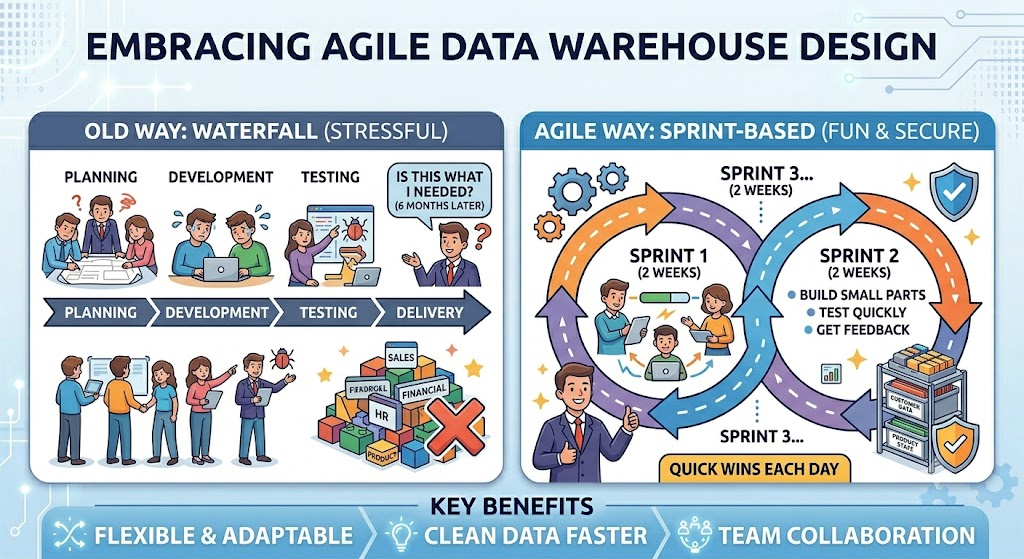
The world of information moves very fast today. That is why many teams now use agile data warehouse design. Instead of waiting months for a finished product, you build small parts and test them quickly. This way, if you make a mistake, you can fix it right away. It makes the whole process much more fun and less stressful. You can show your work to others early and get feedback to make it even better. Agile methods help teams stay flexible and keep building things that truly help the business succeed every single day.
Designing for Marketing Teams
A marketing data warehouse design is a bit special because it tracks how people click and buy things. It needs to pull info from social media, emails, and website visits. By keeping this data in one place, marketers can see what ads are actually working. They can find out which products people love the most without guessing. This specific type of design needs to be very fast so marketers can change their plans in real-time. When done right, it helps businesses talk to their customers in a much more helpful and personal way.
Top Data Warehouse Design Tips for Success
If you want to succeed, keep these data warehouse design tips in mind. Always document your work so others understand why you made certain choices. Focus on how fast people can get their reports. If a report takes an hour to load, nobody will use it. Also, think about how to keep your data secure so only the right people can see it. Always keep the end user in mind when making changes. If you make it easy for them, they will love using the system to do their jobs better.
Making Your Data Easy to Use
The goal of all this work is to make data usable for everyone, not just computer experts. A great data warehouse design removes the confusion from complex numbers. It turns boring rows and columns into clear charts and simple stories. When information is easy to see, people feel more confident making big business moves. We should always aim for a design that invites people to explore their data. When you make information friendly and accessible, you help everyone in the office do their best work without feeling overwhelmed by technical details.
Choosing the Right Technology
There are many tools available for your data warehouse design project. Some are free, and some are built for massive global companies. You should pick a tool that grows with your business needs over time. Do not feel pressured to buy the most expensive option right away. Start with something simple that does the basics really well. As you learn more about your data, you can switch to more advanced systems. The most important thing is that the tool works for you, not that you are working hard to make the tool behave.
Keeping Everything Organized
One of the most important parts of data warehouse design is naming things clearly. If a folder is named “Data_Final_V2_New,” nobody will know what is inside. Use names that are easy to understand, like “Customer_Sales_2026.” Keeping your labels clean makes everything much easier to find later. You should also keep a “dictionary” of these names so everyone on the team is on the same page. This small step might seem boring, but it prevents huge headaches later. Organized data is always the most useful data for everyone involved.
Thinking About the Future
When you work on your data warehouse design, always look a few steps ahead. What happens if your business triples in size next year? Will your system still work, or will it break? By building with the future in mind, you avoid having to tear everything down later. Think about how you can add new sources of information without breaking the old ones. A solid design is one that is flexible, strong, and ready for whatever comes next. Being prepared is the secret to a system that stays helpful for a very long time.

Frequently Asked Questions
What is data warehouse design?
It is the process of planning how to store and organize data so it is easy to find and use for business reports.
Why is data warehouse design important?
It helps businesses turn raw numbers into clear, helpful information for making smart decisions quickly.
What are common data warehouse design patterns?
Common patterns include top-down and bottom-up approaches, which help teams decide how to structure their storage systems.
Can I use agile data warehouse design for small teams?
Yes, it is perfect for small teams because it lets you build and improve things in small, manageable steps.
How does marketing data warehouse design help?
It pulls info from ads and website traffic into one place, helping marketers see what works best for their customers.
What are the best data warehouse design principles?
Focus on simplicity, scalability, and ensuring the data is clean, secure, and easy for non-experts to understand.
Conclusion
Mastering data warehouse design is a journey that pays off for any business. By following these steps and keeping your goals simple, you can build a system that works perfectly for your team. Remember to keep things clean, stay flexible with agile methods, and always focus on what the user needs. Building a great system is not just about the technology; it is about making data work for real people. Do you have a project you are currently working on? Let us know in the comments below or reach out if you need more help getting your data organized!