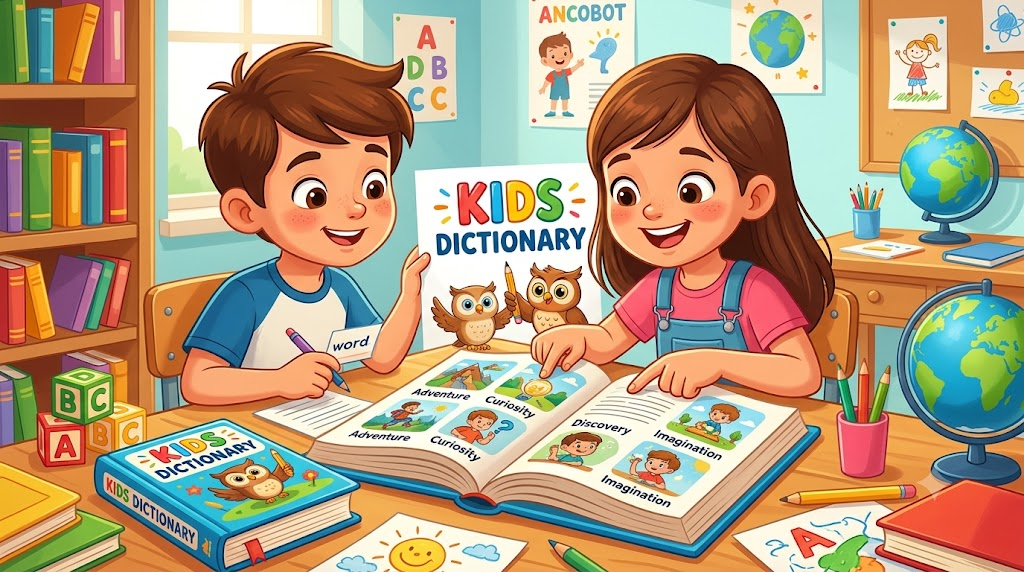
Words are like little magic wands. Kids Dictionary When you know a new word, you unlock a brand-new way to share your big ideas with the world. Imagine trying to tell a funny story without knowing the word hilarious or trying to describe a yummy snack without the word crunchy. It can feel a bit tricky! That is why having your very own word helper is so special. A special book made just for children is one of the best tools you can own. It turns the big, confusing adult world into fun puzzles you can solve all by yourself.
When I was little, I used to flip through heavy reference books with tiny text and zero pictures. It felt like reading a boring telephone book! Thankfully, today’s word guides are completely different. They are bright, colorful, and packed with silly examples that make you giggle while you learn. Whether you are writing a story about a flying turtle or trying to understand your homework, the right book makes all the difference. Let us dive into everything you need to know about finding the ultimate word guide for young learners.
What Exactly Is a Kids Dictionary?
A specialized word guide is not just a heavy book collecting dust on a shelf. It is a colorful treasure chest filled with thousands of words, bright pictures, and fun facts. Unlike adult reference books that use difficult jargon to explain things, these child-friendly versions use simple language that a fifth-grader can easily understand. Every single page is designed to spark curiosity rather than make you feel confused.
Think of it as your personal guide whenever you encounter a strange new term in a storybook. Instead of guessing what a word means, you can simply open the pages and go on a mini treasure hunt. These special books often include pronunciation guides so you can say the words out loud without stumbling. They bridge the gap between fun reading and smart learning, helping young readers build confidence every single day.
Why Every Young Reader Needs One
Reading books is an amazing adventure, but running into unfamiliar terms can sometimes slow down the fun. Having a dedicated reference book right next to you changes everything. It gives you the power to find answers independently without needing to ask a grown-up every five minutes. This builds wonderful reading habits and teaches you how to solve problems on your own.
When you use a word guide regularly, your vocabulary grows by leaps and bounds. You start noticing cool new ways to express your feelings and describe your favorite things. Teachers and parents love seeing children use these books because it unlocks better writing skills and boosts school performance. It is like having a secret superpower tucked right inside your backpack.
Top Features to Look For
Choosing the right book can feel overwhelming because there are so many cool options out there. The best ones always include vibrant illustrations that bring definitions to life. Pictures help your brain connect the meaning of a word instantly, making it much easier to remember later on. Look for books that feature bold, large text so your eyes do not get tired while reading.
Another fantastic feature is example sentences that show the word being used in everyday situations. For instance, seeing the word brave explained is nice, but reading a sentence like “Leo felt brave when he climbed to the top of the jungle gym” makes it click right away. Alphabetical tabs on the edge of the pages are also super helpful for finding your way around quickly without flipping endlessly.
How It Boosts Spelling and Writing Skills
Have you ever stared at a piece of paper wondering if a word has an “ie” or an “ei” inside it? We have all been there! A great word guide acts as your ultimate spelling checker. It shows you the correct way to spell tricky terms so you never have to guess or cross things out with messy eraser marks.
Once your spelling improves, your writing becomes so much more exciting. Instead of using the same boring words over and over again, you can swap them out for fresh, interesting synonyms. Your school essays and creative stories will sparkle with personality. Your teachers will be amazed at how much your writing has grown just by exploring a few pages each week.
Digital vs. Printed Word Guides
We live in a super cool digital world where information is just a tap away on a screen. Digital word guides and apps are awesome for quick searches when you are on the go. They often include audio buttons that let you hear the exact pronunciation of a tricky word instantly. This interactive feature is fantastic for auditory learners who love hearing language in action.
However, there is still something truly magical about holding a physical book in your hands. Turning real paper pages helps you focus better without the distraction of pop-up ads or notification pings. Many kids love flipping through a printed book and discovering unexpected new words just by letting their fingers stop on a random page. A mix of both formats works wonders for modern learners.
Fun Word Games You Can Play
Learning new vocabulary does not have to feel like homework at all. You can turn your word guide into a playground by playing fun games with your friends or family. One great game is called “Word of the Day.” Every morning, open the book to a random page, pick a cool new term, and try to use it in three different sentences before lunchtime.
Another fun challenge is the definition guessing game. One person reads out a funny definition from the book, and everyone else has to race to find the matching word on the page. These playful activities prove that expanding your brain can be an absolute blast. Before you know it, learning feels less like a task and more like a game you always want to win.
Choosing the Right Age Group
Books come in all shapes and sizes, and they are tailored for different stages of growth. For younger children in early elementary school, picture-heavy glossaries with simple concepts work best. These editions focus on everyday objects, animals, and basic feelings to build a solid foundation.
As children grow older and enter the middle grades, the content becomes more advanced. These intermediate editions introduce grammar tips, word origins, and richer synonyms. Picking the right level ensures that the reader feels challenged and supported without getting frustrated by information that is way too advanced.
Common Mistakes to Avoid
Sometimes, kids get a brand-new reference book and treat it like an ornament on their desk. The biggest mistake is letting it sit untouched instead of making it part of your daily routine. Make it a habit to look up at least one unfamiliar word every time you read a storybook or watch a documentary.
Another mistake is picking a book that has too much tiny text and zero pictures. If a page looks like a boring wall of gray text, it is easy to lose interest right away. Always choose a layout that feels inviting, colorful, and easy on the eyes so you actually look forward to opening it up.
Expert Tips for Parents and Teachers
Grown-ups play a huge role in making word exploration an exciting daily adventure. Instead of just handing a child a book, sit down together and explore a few fun pages as a team. Point out silly words, look at the funny illustrations, and share your own favorite terms to spark a lively conversation.
Encourage children to keep a special journal where they can write down their favorite new discoveries. Drawing a small picture next to each new word helps lock the definition into long-term memory. With a little encouragement from adults, exploring vocabulary becomes a lifelong habit that children will cherish forever.
Complete Detailing Table
| Feature Category | What to Look For | Why It Matters for Kids |
| Visuals | Bright illustrations and photos | Helps connect meanings instantly through images |
| Font Style | Large, clear, bold text | Prevents eye strain and keeps reading comfortable |
| Examples | Relatable everyday sentences | Shows how terms fit into real-life conversations |
| Layout | Alphabetical tabs and sidebars | Makes navigation fast, easy, and frustration-free |
| Pronunciation | Simple phonetic spellings | Teaches children how to say words out loud correctly |
Conclusion
Exploring the wonderful universe of language is one of the most exciting journeys a young mind can take. Armed with the right word guide, every child has the tools they need to read better, write smarter, and express their biggest dreams with confidence. Why not pick out a fantastic new book today and start your own word-hunting adventure? Drop a comment below sharing your absolute favorite silly word, and let us keep the conversation going!
Frequently Asked Questions
What age is best to start using a kids dictionary?
Children can start looking at picture-based word books around age four or five. More detailed text editions are fantastic for elementary students in grades three through five.
How does a kids dictionary differ from an adult version?
Child-friendly versions use simple vocabulary, engaging illustrations, and relatable example sentences instead of complex, dry technical jargon.
Can these books improve spelling skills?
Yes! Seeing words spelled out correctly every day helps train your brain to spell them accurately in school assignments and creative stories.
Are digital apps better than physical books?
Both have unique perks. Digital apps offer audio pronunciation, while physical books help reduce screen time and improve focus.
How can I make learning new words fun?
You can turn it into a game by picking a “Word of the Day” and trying to use it in funny sentences during dinner or playtime.
Where can I find a good word guide for my child?
You can explore local bookstores, school book fairs, or online libraries to find colorful options tailored to different reading levels.