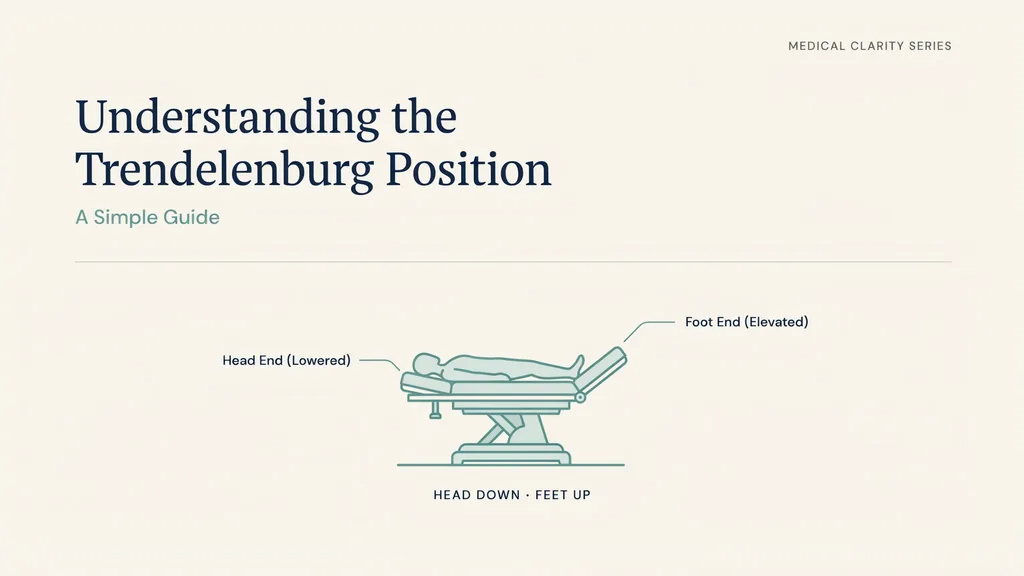
If you have ever had a surgical procedure or watched a medical show, you might have heard about specific body positions used by doctors. While there is no medical term called “tenderburg position,” it is highly likely you are thinking of the Trendelenburg Position. This is a very common technique used in hospitals and operating rooms to help surgeons do their best work.
What Is the Trendelenburg Position?
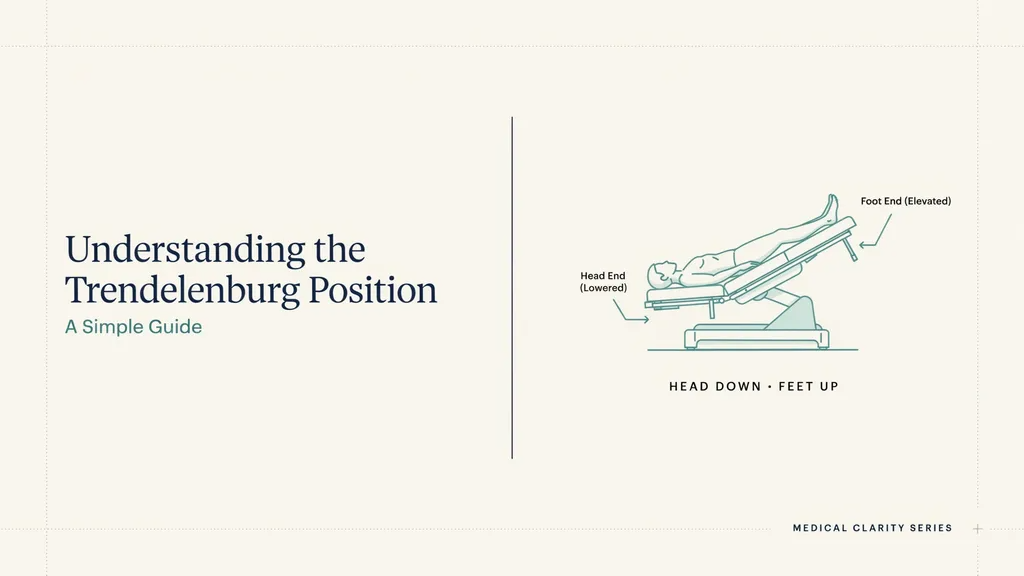
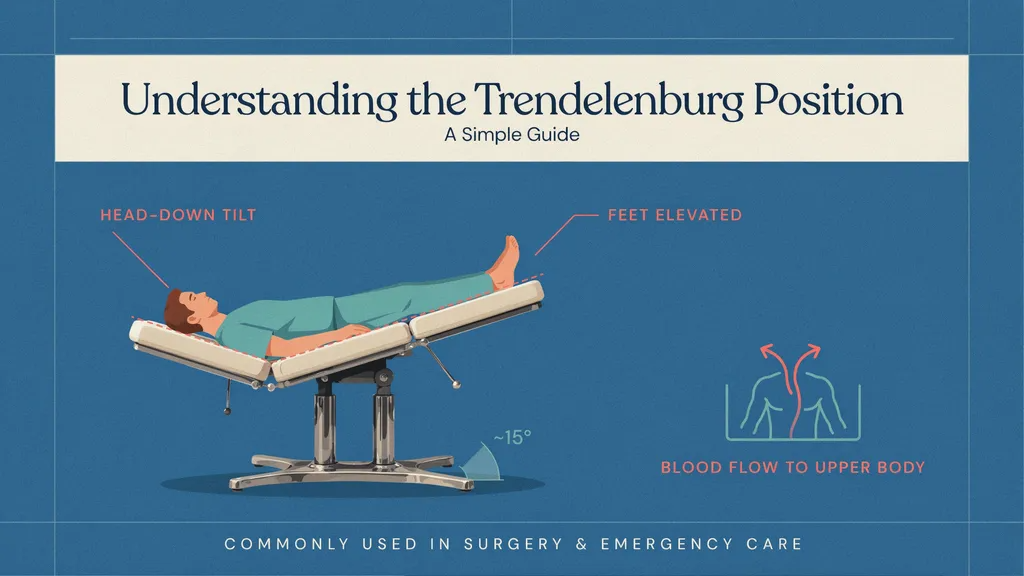
The Trendelenburg position is a way to place a patient on a bed or operating table. The patient lies flat on their back, and the table is tilted so that the head is lower than the feet. It is usually tilted at an angle between 15 and 30 degrees. This simple change uses gravity to help medical teams during certain procedures.
How Gravity Helps in Surgery
Why would a doctor want your head lower than your feet? It is all about gravity. When you are in the Trendelenburg position, your abdominal organs gently slide toward your head. This clears space in your lower belly and pelvis. It gives surgeons a much better view and more room to work safely.
Common Uses in Modern Medicine
Doctors use this position for several important tasks. It is most common during surgeries on the lower abdomen or the pelvic area. It is also helpful when doctors need to place a central venous catheter, which is a special line used to deliver medicine or fluids into the veins.
Understanding the “Steep” Variation
Sometimes, doctors need a better view for robotic surgeries. In these cases, they might use the “steep” Trendelenburg position. This involves a much sharper angle, often between 30 and 40 degrees. Because this is a more intense tilt, the team takes extra care to keep the patient safe and comfortable throughout the procedure.
The Modified Trendelenburg Position
Not every procedure requires a head-down tilt. The modified Trendelenburg position is a bit different. In this version, your head and back stay flat, but your legs are raised. This helps encourage blood flow back toward your heart and brain without tilting your whole body. It is often a more comfortable option for certain medical needs.
Safety and Monitoring During the Procedure
Patient safety is the number one priority in any hospital. When you are in the Trendelenburg position, nurses and doctors watch you very closely. They monitor your breathing and blood pressure to make sure everything stays normal. They also use pads and straps to keep you secure so you do not slide while the table is tilted.
Are There Any Risks?
Any medical position has some risks if used for too long. Being in a head-down tilt can sometimes put pressure on the lungs or increase pressure in the head and eyes. This is why medical teams only use the Trendelenburg position when it is truly necessary and keep the time spent in the position as short as possible.
Recovery After the Procedure
After a procedure, your body might need a moment to adjust once the table is moved back to a flat position. You might feel a little bit of swelling in your face or throat for a short time. This is normal and usually goes away quickly as your circulation returns to its standard anatomical state.
Why It Is Named “Trendelenburg”
You might wonder where the name comes from. It is named after a 19th-century German surgeon named Friedrich Trendelenburg. He was a pioneer in surgery who realized that changing a patient’s position could make complex operations much safer and easier to perform. His work changed how we approach surgery today.
Conclusion
If you are worried about your position during a surgery, it is always okay to ask your doctor or nurse. They are there to support you and keep you safe. They can explain why a certain position is needed for your specific procedure and what they will do to keep you comfortable during the entire time.
Summary Table: Position Quick-Reference
| Position | Description | Common Use |
| Trendelenburg | Head down, feet up (15–30°) | Pelvic surgery, central lines |
| Steep Trendelenburg | Head down, feet up (30–40°) | Robotic pelvic surgery |
| Modified Trendelenburg | Flat back, legs raised | Improving blood flow |
| Reverse Trendelenburg | Head up, feet down | Upper abdominal surgery |
Frequently Asked Questions
1. Is the Trendelenburg position the same as the “tenderburg” position?
No, “tenderburg” is not a medical term. It is a common misspelling of the Trendelenburg position.
2. Why do doctors use this position?
It uses gravity to move organs away from the surgical site, giving doctors more space and a better view.
3. Is the Trendelenburg position safe?
Yes, when used correctly by trained medical professionals who monitor the patient carefully.
4. How long can you stay in this position?
Doctors try to keep the time in this position as short as possible to prevent side effects.
5. What is the difference between this and reverse Trendelenburg?
In Trendelenburg, the head is lower than the feet. In reverse, the head is higher than the feet.
6. Does it hurt?
Most patients are under anesthesia during surgery, so they do not feel the position at all.