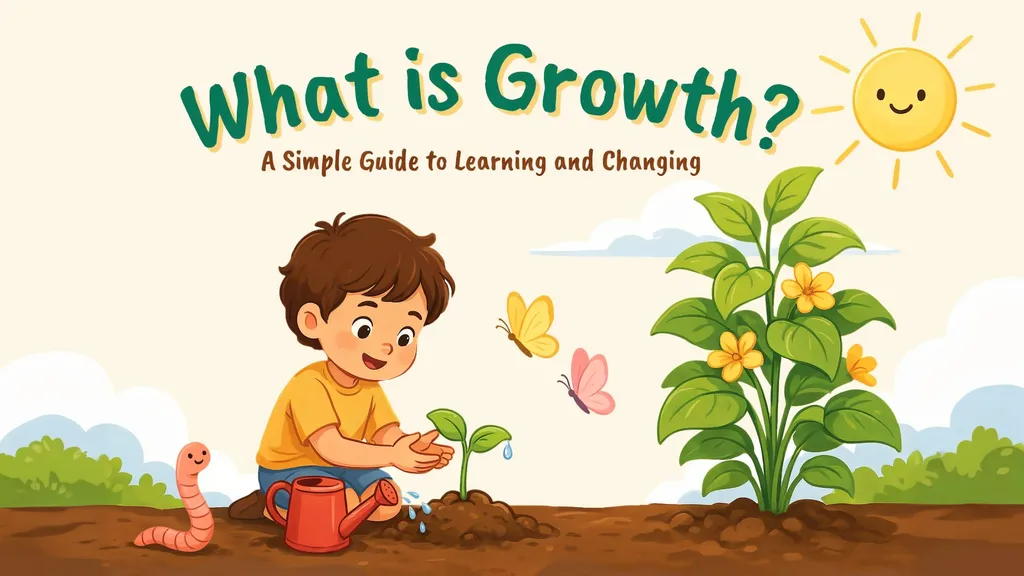
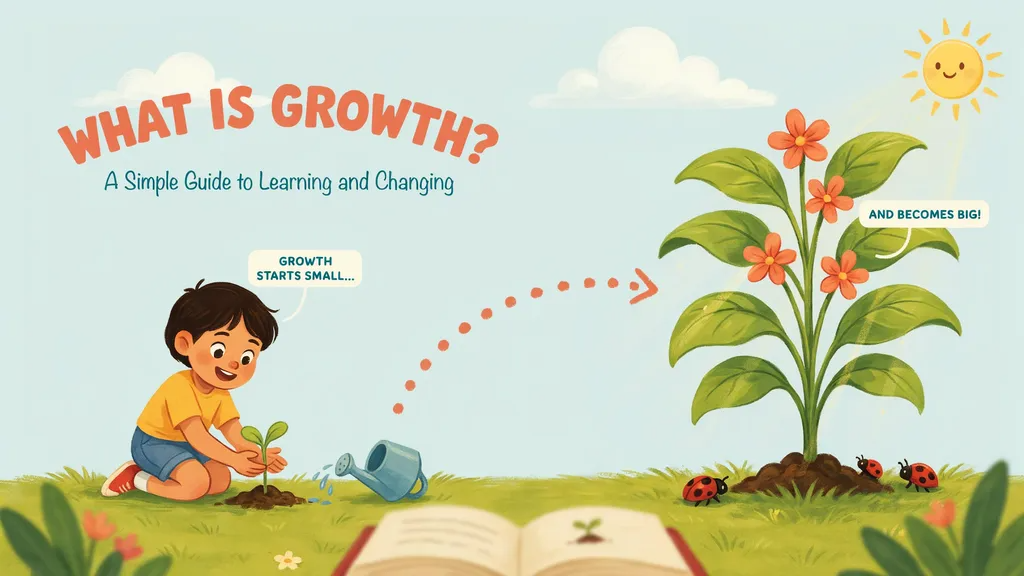
Have you ever planted a tiny seed in the dirt? At first, it is just a small hard shell. With some water, sunshine, and time, it turns into a big green plant. That amazing change is exactly what Growth is all about.
When people talk about growth, they do not always mean getting taller. Real personal growth means changing on the inside. It means learning new things, becoming kinder, and getting better at solving tricky problems. Just like a muscle gets stronger when you lift weights, your brain gets stronger every time you try something new. You might learn how to share your toys, read a bigger book, or ride your bike without training wheels. All of these wonderful changes count as growth in your daily life.
Why Growing Up is an Adventure
Think of your life as a giant, exciting video game map. Every day is a new level waiting to be unlocked. If your character stayed in the exact same spot forever, the game would get pretty boring, right? That is why growth is so important. It helps you discover cool hidden talents you never knew you had. You might try painting, playing soccer, or building with blocks and realize you love it. Embracing growth lets you level up your skills and turn mistakes into fun learning moments.
The Power of the “Yet” Magic Word
Do you ever feel frustrated when you cannot do something right away? Maybe it is a tough math problem or a difficult piano song. Instead of saying, “I can’t do this,” try adding one magic word to the end: yet. Saying “I cannot do this yet” completely changes your growth mindset. It tells your brain that you just need a little more practice. This positive growth mindset is like a superhero cape for your thoughts. It helps you keep trying even when things get super tough.
Planting Good Daily Habits
Big changes do not happen overnight. They happen because of small steps you take every single day. Think of your good habits as tiny drops of water helping your growth journey. Brushing your teeth, packing your school bag, and listening to your teachers are all great examples. When you repeat these small actions, they become automatic. Building healthy routines creates a strong foundation for future growth and helps you feel ready to take on big challenges.
Learning from Bumpy Mistakes
Nobody is perfect, and that is completely okay! Making mistakes is actually a secret superpower for growth. Imagine you are learning to draw a picture of a dog, but the ears look a little funny. That mistake is not a failure; it is just a helpful hint on how to do it better next time. When you fall down on the playground, you learn how to stand back up. Embracing continuous improvement means you are always learning from the bumps in the road.
Setting Fun and Simple Goals
Goals are like treasure maps for your dreams. A goal gives you a clear target to aim for each week or month. You might set a growth goal like reading three chapter books or learning to tie your shoes all by yourself. When you reach a milestone, it feels absolutely amazing. To keep your growth exciting, make sure to celebrate your small wins along the way. High-five your parents, do a happy dance, or treat yourself to an extra scoop of ice cream!
Asking for Help Along the Way
Even the tallest trees in the forest need rain and sunshine from the outside world. Similarly, true growth happens faster when you accept help from caring adults. Your parents, teachers, and coaches have a lot of wisdom to share with you. If you are struggling with a difficult school project or feeling sad, do not keep it bottled up. Asking questions, seeking mentorship, and talking about your feelings helps your heart and mind stay healthy and strong.
Feeding Your Brain with Good Things
Your brain is like a super-smart computer. It needs the right kind of fuel to function at its best every single day. Getting plenty of sleep, eating healthy foods, and drinking water are huge parts of your physical growth. When you rest well, you have the energy to focus in class and play outside. Reading fun stories, solving puzzles, and exploring new hobbies also provide amazing intellectual growth to keep your curious mind sharp and happy.
Tracking Your Amazing Progress
How do you know how much you have changed over the years? Looking at old photo albums or school notebooks is a fun way to see your growth tracking in action. You might laugh at how messy your handwriting used to be compared to how neat it is now. Keeping a simple journal or drawing pictures of your achievements helps you see exactly how far you have come. Remembering your past successes makes you feel brave enough to tackle tomorrow’s adventures.
Spreading Kindness to Others
The best part about personal growth is that it helps you make the world a better place. As you learn and mature, you naturally become more caring towards your friends, family, and neighbors. Sharing your snacks, helping a classmate with their chores, and saying kind words are beautiful examples of social growth. When you lift others up and help them shine, you grow as a wonderful human being, and that makes everyone around you smile.
Conclusion
Every single morning, you wake up with a blank page waiting to be written. Growth is not a race against your friends; it is simply about being a tiny bit better than you were yesterday. Keep trying new things, be super proud of your unique talents, and never stop exploring the big world around you.
What is one fun new skill you want to learn this week? Let us know in the comments below, and let’s keep growing together!
Frequently Asked Questions
What is the easiest way to start growing every day?
The easiest way is to read new books, try new hobbies, and always ask questions when you are curious about how things work.
Why is making mistakes important for kids?
Mistakes show your brain what needs extra practice, helping you learn faster and become much braver when facing new challenges.
What is a growth mindset?
It is the happy belief that you can get smarter and learn difficult things through hard work, practice, and never giving up.
How can parents help their children grow?
Parents can offer encouragement, teach new skills, celebrate small wins, and create a safe space for asking questions and exploring.
What are good goals for a student?
Great goals include finishing homework on time, practicing a musical instrument, joining a sports team, or being a helpful friend.
How do I know if I am actually growing?
You will notice that tasks which used to feel super hard, like tying your shoes or reading words, now feel easy and fun!